


Written by: Talita Martins (talita@agenciaaids.com.br) / Agência Aids
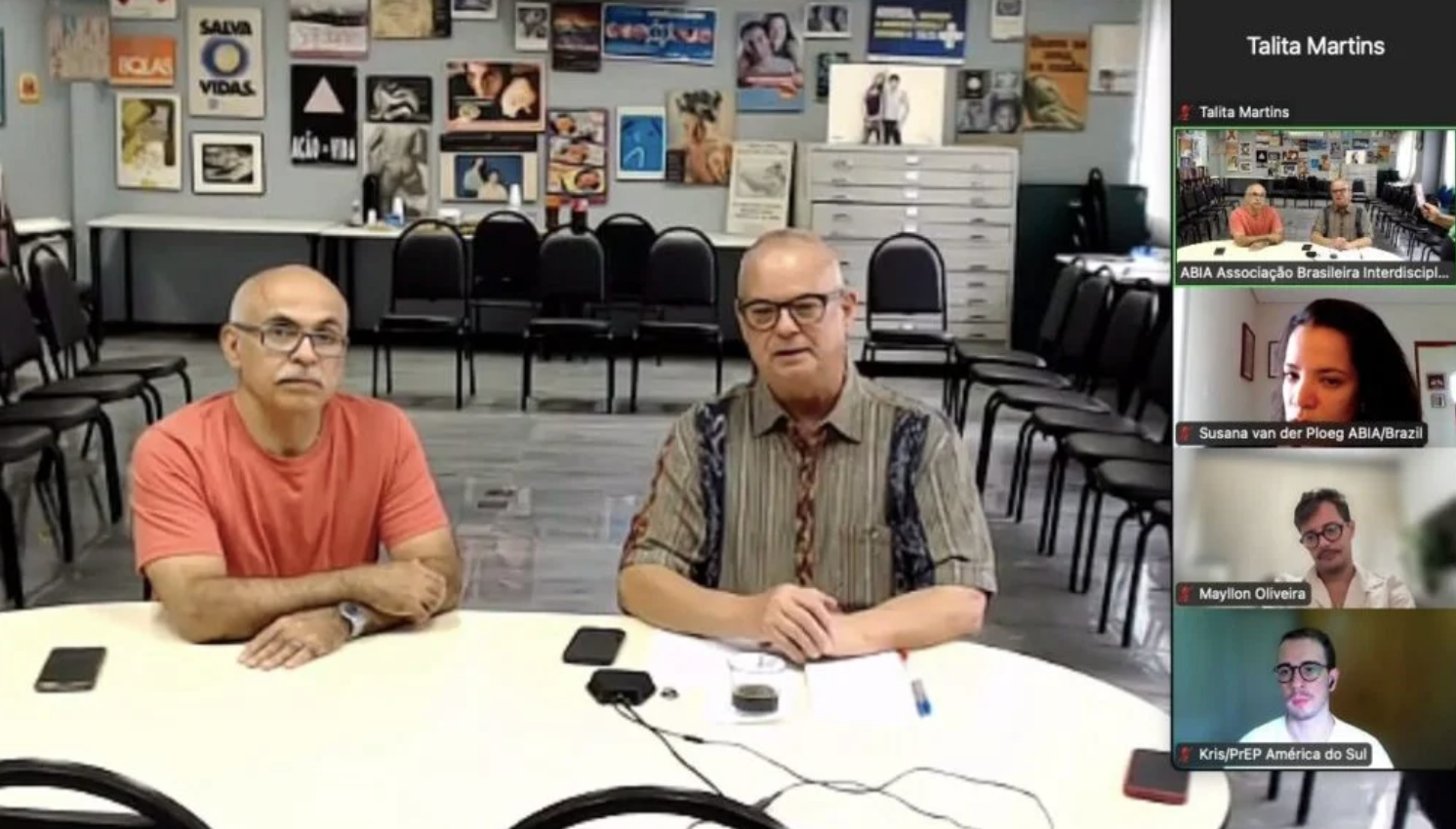
The afternoon was tense in Rio de Janeiro — sirens, blocked streets, and the city center emptied by yet another police operation that turned the city into a true war-like scenario. Even so, the Brazilian Interdisciplinary AIDS Association (ABIA) maintained its tradition of resistance and virtually launched ABIA Bulletin No. 68.
The publication, dedicated to the barriers to accessing Pre-Exposure Prophylaxis (PrEP), brings together articles by researchers and activists addressing a topic that is as urgent as it is complex: the gap between the advancement of science and the reality of those who need it most.
“We have declarations of access before we have real access,” summarized ABIA’s executive director, Richard Parker, at the opening. For him, the promise of PrEP—presented as a revolution in the response to HIV—cannot be sustained without consistent public policies and without an ethical debate about inequalities.
“Success narratives are often exaggerated. PrEP cannot solve prevention without a true pedagogy of care, which seems to have disappeared from campaigns and public policies. Technological optimism cannot blind us.”
Eliminating HIV is a political issue.
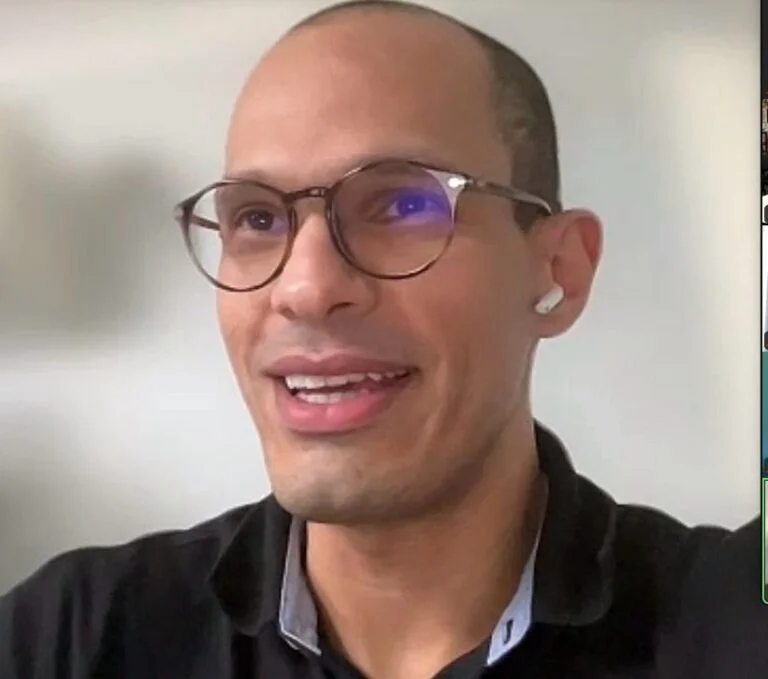
Professor Laio Magno, from the State University of Bahia and a researcher at Fiocruz, author of the article Eliminating HIV/AIDS depends on strategies that address health inequities, opened the event by noting that Brazil is living a paradoxical moment: on the one hand, it has exemplary policies and high treatment rates; on the other, it continues to live with inequalities that still define who lives and who dies.
"Eliminating HIV is not a scientific challenge—it's an ethical and political one. As long as there is exclusion and racism, there will be no elimination."
Laio highlighted that 91% of people living with HIV in Brazil know their diagnosis and 81% are in treatment, but the indicators hide a pattern: those who die most from AIDS continue to be the black, poor, and less educated population.
"HIV continues to be a marker of Brazilian inequalities. Testing and PrEP still don't reach where they should—among young people, transgender people, and women in vulnerable situations. It's not enough to have technology; it's necessary to guarantee the right to health as a political practice."
Speaking about the global scenario, Laio mentioned the rise of conservatism and cuts to international programs, such as PEPFAR, which could lead to tens of thousands of deaths by 2030.
"Eliminating HIV is not a scientific challenge—it's an ethical and political one. As long as there is exclusion and racism, there will be no elimination."
Patents, monopolies, and a new face of exclusion.
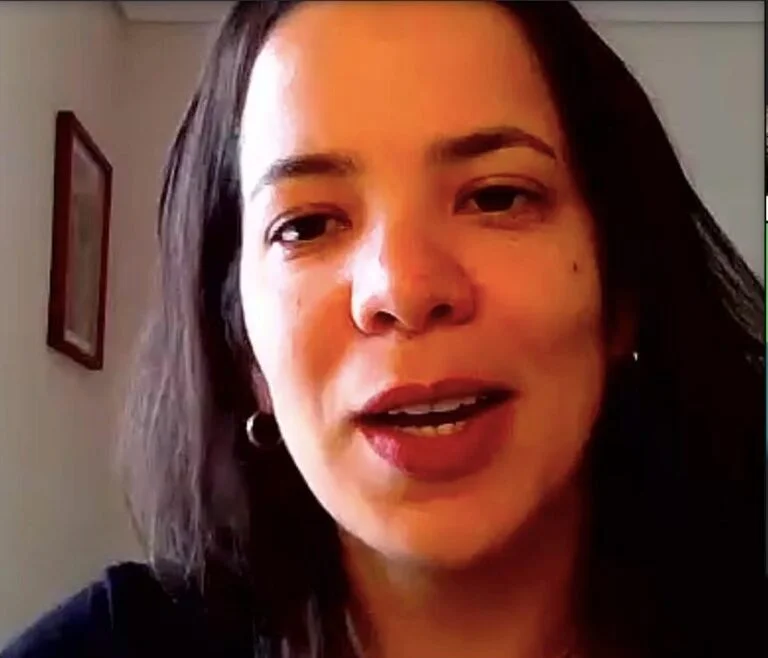
Researcher and lawyer Susana Van Der Ploeg, from ABIA and GTPI/Rebrip, brought to the debate the topic that today concentrates a good part of the global dispute over life: patents and the power of the pharmaceutical industry.
In her text Lenacapavir, innovation and exclusion: the struggle for universal access, written with Richard Parker and Veriano Terto Jr., she describes the paradox of a drug celebrated as a scientific innovation and, at the same time, inaccessible to most of the world's population.
“Lenacapavir was chosen by Science magazine as the innovation of the year, but what is this innovation when access is not available?” he questioned. “We have about 10 million people without antiretrovirals. And meanwhile, Gilead charges $40,000 for a treatment that could cost $40.”
Susana explained that the drug, developed with public funding from the National Institutes of Health in the United States, has been transformed into a private monopoly. She also warned about Brazil's exclusion from international generic drug agreements.
“It’s a silent genocide,” he stated. “The populations that participated in the clinical trials, many of them the most vulnerable, are now excluded from access to the very medicine they helped develop.”
She also issued a warning about the impact of the new clinical research law in Brazil, which, according to her, represents a serious setback.
“This new legislation eliminates the right to post-study access. This means that people who participated in clinical trials with lenacapavir may have their treatment interrupted within five years. It is a profound ethical violation — we are turning research subjects into disposable beings.”
According to Susana, Brazil needs to return to its historical stance of confronting monopolies.
"As President Lula said in 2007, every discovery of interest to humanity should be the heritage of humanity. It is unacceptable for someone to get rich off the misfortune of others."
Solidarity as a scientific practice
Anthropologists Kris Herik de Oliveira (USP) and André Luiz Machado das Neves (Universidade do Estado do Amazonas) offered one of the most insightful reflections at the event. Based on the multicenter study PrEP South America, they presented an analysis of access to prophylaxis in five countries in the region and the role of solidarity as an ethical and political principle in the response to HIV.

“Participating in an ABIA newsletter is both a joy and a responsibility,” Kris began. “ABIA represents decades of struggle, knowledge production, and commitment to life. Discussing PrEP in South America means understanding that the continent carries historical wounds—racism, colonialism, neoliberalism, gender violence—that profoundly shape access to healthcare.”
He pointed out that, although PrEP has been considered one of the most promising technologies in combined prevention, access in South America remains limited. There are countries, such as Bolivia, Suriname, and Venezuela, without public PrEP policies.
“We have around 1.8 million people living with HIV in the region. But there are countries that don't even have a public policy on PrEP. Even where it is available, symbolic and institutional barriers persist—stigma, racism, lack of support. Availability is not the same as access. PrEP is much more than a biomedical technology: it is also a symbolic, moral, and political field.”
Kris also highlighted that care and support should be at the heart of prevention strategies. “The success of PrEP will not depend solely on the pill or injection, but on the ability of health services to support people in their complexity—with respect, listening, and solidarity. That is what combined prevention is all about.”

André Neves added, detailing the study's methodology. “The PrEP South America study brings together more than 40 researchers from Brazil, Argentina, Bolivia, Colombia, and Paraguay. We adopted an ethnographic approach to understand the experiences of users, professionals, and managers. What we found is that the success of PrEP depends on much more than the medication—it depends on bonds, trust, and recognition of local ways of living and caring.”
For André, the project has a political commitment to solidarity: “Solidarity is not just a moral value. It is a way of managing, a practice of resistance. It means assuming collective responsibility in the face of injustice. We believe that only with solidarity is it possible to build more equitable public policies that treat prevention also as a means of producing life. Without this, no social transformation is possible.”
Youth, digital networks and the future of prevention.

Publicist and researcher Mayllon Oliveira, from Fiocruz, in his article "PrEP, youth and the future: what we still need to agree on," co-authored with Kátia Lerner, drew attention to the generational gap between public policies and the way young people get information and interact with each other.
“Generations Z and Alpha think, relate, and seek information in completely different ways. Less than 1% of people under 18 access PrEP, and the dropout rate among teenagers reaches 64%,” he highlighted.
“These young people talk about sexuality on Reddit, Twitch, and Roblox—not on traditional social media. We need to be in those spaces, with less conservative campaigns. We need to create active pedagogies, with listening, youth empowerment, and influencers who speak their language.”
Mayllon emphasized that prevention among young people should be understood as a continuous educational process that transforms information into engagement. “We need to form support networks and create environments of trust. Prevention is not just technical: it is political, cultural, and communicational.”
Between inequality and hope
The final debate, moderated by Veriano Terto Jr., brought together comments on adherence, religion, and the limits of so-called "combined prevention."
Veriano highlighted concerns about PrEP adherence and dropout rates. "There are programs, like the one at the CRT in São Paulo, with dropout rates close to 60%. This forces us to rethink our strategies."
Laius Magnus observed that "stopping PrEP doesn't mean abandonment," arguing that the concept of persistence should replace that of rigid adherence. "Sexual life is dynamic, and PrEP use should be too."
Participants also raised reflections on the role of religions and indigenous populations in access to prevention. André Neves considered that "cultural and linguistic diversity requires training and trust-building," while Susana warned of the risk of lenacapavir being used in compulsory policies. "Prevention should be a right, never an imposition," she reinforced.
Richard Parker concluded the event by highlighting that ABIA will continue to monitor and encourage debate on combined prevention and equitable access to new technologies. “Discussing PrEP is discussing democracy and citizenship. Controlling the epidemic will not come solely from science, but from our capacity to build solidarity and social justice.”
The ABIA Bulletin No. 68 is available free of charge on the ABIA website.
Watch the full recording of the event at ABIA channel on Youtube.
ABIA
Website: www.abiaaids.org.br

 English
  Portuguese
  Spanish