


PrEP is for everyone: experiences of use by cis and trans women.
Although PrEP (pre-exposure prophylaxis to HIV) is one of the main combined prevention strategies available today in the Brazilian public health system (SUS), it is still rarely associated with women. Issues such as stigma, lack of information, barriers in health services, and gender inequalities directly influence access to and adherence to this prevention strategy—especially among cisgender and transgender women.
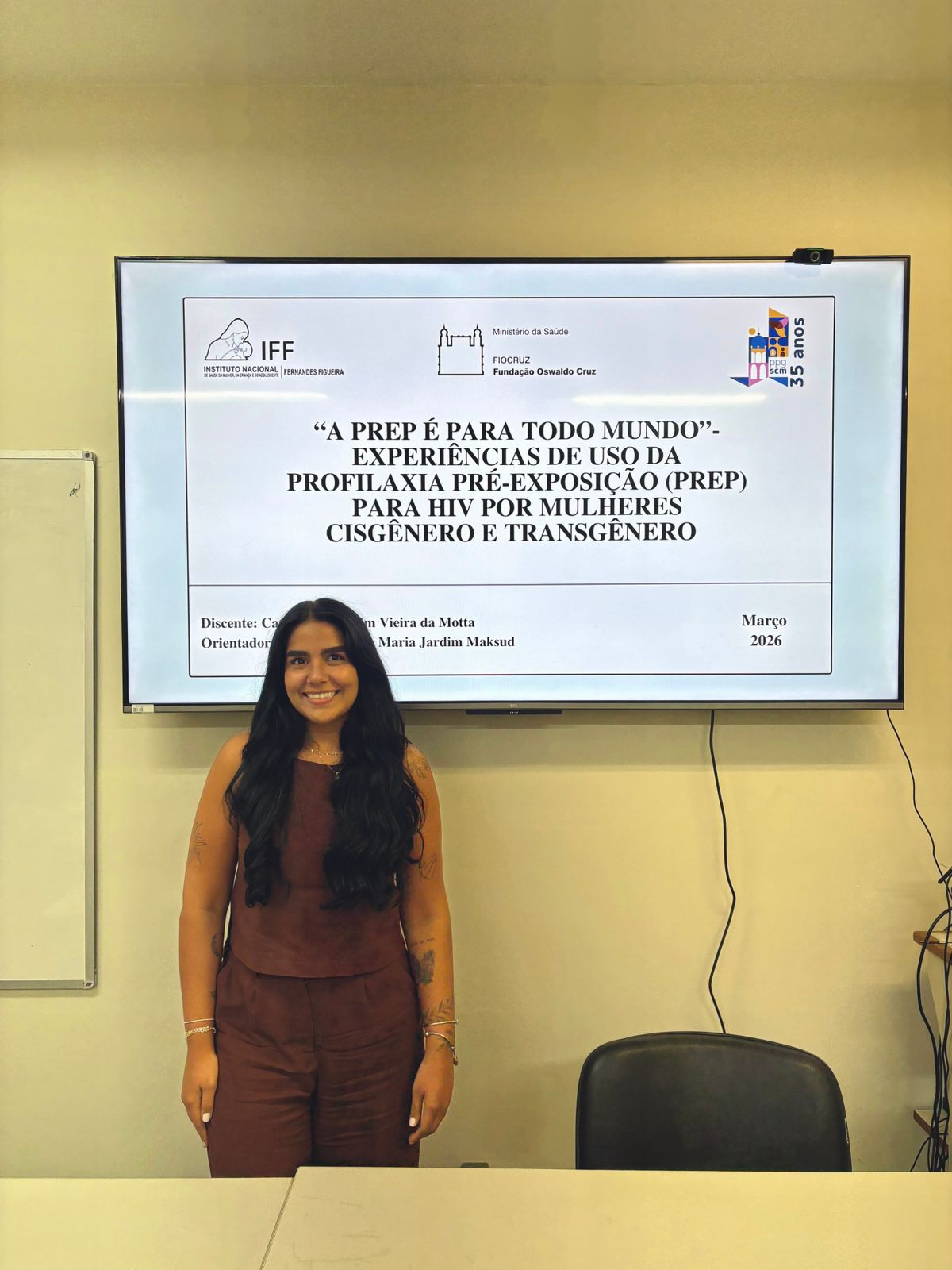
In this interview for the series “In the Field,” we spoke with Catarina Motta, a nurse with a Master's degree in Public Health from the Postgraduate Program in Child and Women's Health (PGSCM) offered by the Fernandes Figueira National Institute of Women's, Children's and Adolescents' Health (IFF) of Fiocruz. In her dissertation, entitled “PrEP is for everyone: experiences of using pre-exposure prophylaxis (PrEP) for HIV by cisgender and transgender women,” supervised by Ivia Maksud, the researcher investigated the experiences of PrEP use among cis and trans women in Rio de Janeiro, analyzing how gender, sexuality, class, and stigma intersect with access to HIV prevention.
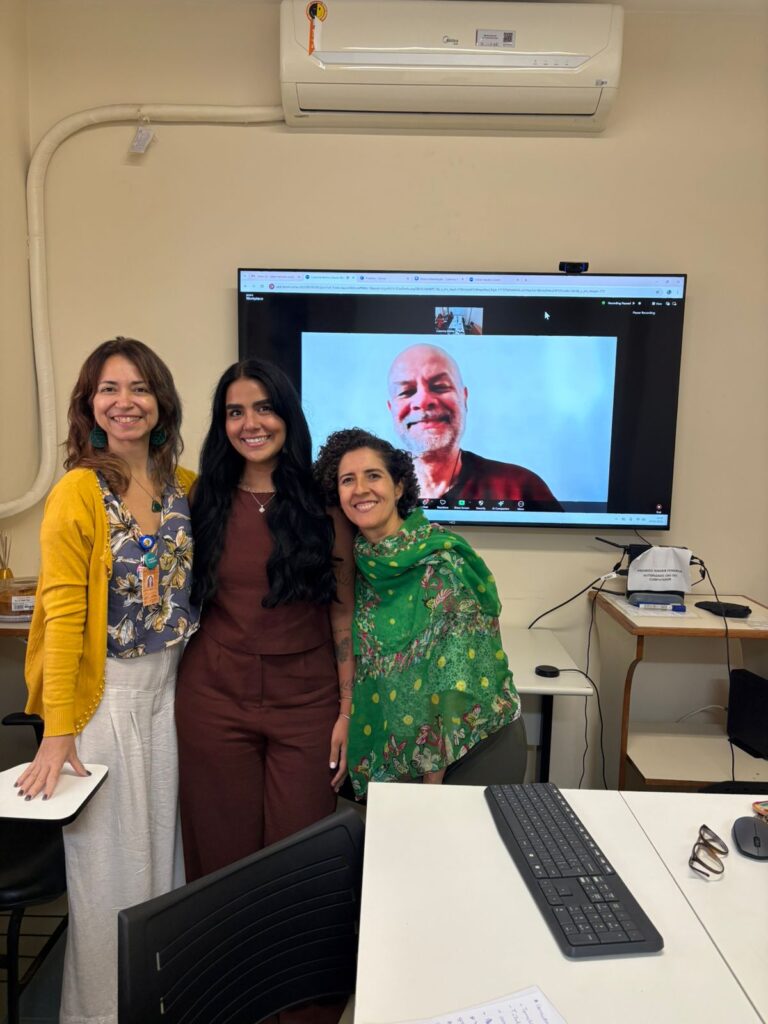
Da esquerda para a direita: a orientadora, Ivia Maksud, Catarina Motta e a pesquisadora Claudia Mora (CLAM/IMS/UERJ). Ao fundo: Marcos Nascimento, docente do PGSCM. / Foto: Divulgação
PrEP South America: To begin, could you explain the objective of your dissertation?
Catarina: The goal was to understand the experiences of PrEP use by cis and trans women. I analyzed these experiences from intersectional markers, such as race, class, gender, and sexuality, understanding the particularities of cis and trans women in relation to access to and use of prophylaxis.
PrEP South America: Where was the research conducted and what was the methodology?
Catarina: The research was conducted in Rio de Janeiro and was qualitative in nature. We carried out semi-structured individual interviews, all in person. We used networking and the "snowball" sampling technique to recruit participants. Afterwards, we performed a thematic analysis of the data, from which 38 units of meaning and five final categories of analysis emerged.
PrEP in South America: What challenges have arisen along the way?
Catarina: One of the main challenges was finding women who used PrEP and were willing to share their experiences, especially trans women. Initially, the research planned for ten participants, but we managed to interview six women: four cis and two trans. I also noticed, throughout the interviews, a constant learning process about how to conduct the fieldwork and delve deeper into the questions.
PrEP South America: So, you had difficulty finding trans women who were willing to share their experiences?
Catarina: Yes. One of the trans participants said something that really struck me: there's a certain weariness in participating in research without concrete returns for this population. Many trans women are constantly called for interviews and surveys, but they feel that this doesn't always translate into concrete improvements in public policies or health services. This made me reflect a lot on the very production of knowledge.
PrEP South America: How have race and class intersected the research?
Catarina: We had quite a bit of difficulty finding participants overall, and this also impacted racial and social diversity. Five of the six participants had completed higher education, and one was currently pursuing higher education. So they were women with a high level of education, which directly influences access to information, health services, and PrEP itself.
The issue of race did not emerge very strongly in the interviews. Among the six participants, two self-identified as mixed-race, and we had no participants who self-identified as Black. So this ended up being a significant limitation of the research.
Therefore, I consider it very important that future research manages to expand this number of participants to bring more diverse experiences.
PrEP South America: What were the main findings of the research?
Catarina: The most frequent motivations for starting to use PrEP were not being in a stable relationship and having multiple partners. The difficulty of negotiating condom use during sexual relations also appeared frequently. Therefore, PrEP emerges as an extra layer of protection.
Regarding inconsistency in condom use, the interviewees reported that it doesn't happen due to a lack of information about HIV, but rather due to issues related to negotiation with partners. So, it's not just a matter of wanting to use them or not. However, it was also mentioned that they didn't always want to use condoms. And many also used other harm reduction strategies, such as frequent testing, dialogue with partners, and PrEP itself.
PrEP South America: Was there any story that particularly stood out to you during the interviews?
Catarina: One of the testimonies that most struck me was that of a participant who said she learned about PrEP through an outreach program by the "SUS van" (a government health service unit). She went out with friends on a Friday and came across this initiative on the street, which distributed condoms and talked about vaccination and prevention. Until then, she had never heard of PrEP for women.
This really struck me because it shows how often access to information still depends on these health education initiatives in the community.
PrEP in South America: What were the main motivations that led these women to seek PrEP?
Catarina: One participant shared that she started using PrEP also out of fear of experiencing sexual violence. She even used the expression "irrational fear," but said she felt safer knowing she would have protection against HIV if something happened. It was a story that really struck me.
PrEP South America: The research also addresses PrEP discontinuation. What were the main reasons reported by participants for stopping use?
Catarina: The most frequent reasons for discontinuing use were the beginning of a relationship considered monogamous, the difficulty in reconciling appointment schedules at health services, and the perception that they were no longer vulnerable to HIV.
Teve uma participante, por exemplo, que começou a usar a PrEP após uma situação específica em que se sentiu vulnerável. Depois que aquela situação terminou, ela disse que não sentia mais necessidade de continuar utilizando a profilaxia. Isso mostra como muitas mulheres associam o uso da PrEP a determinados momentos da vida e a contextos específicos das relações afetivas e sexuais.
PrEP South America: Would you say that participants associate monogamy with a feeling of protection? How does monogamy appear in the accounts?
Catarina: Yes, many accounts associated monogamous relationships with a feeling of protection. One participant said something very striking: she believed she was in a monogamous relationship, but then realized that this monogamy existed "only for her." It was after this experience that she decided to start using PrEP.
This shows how many women do not perceive themselves as vulnerable to HIV within relationships considered stable, even when there are situations of infidelity or difficulty in negotiating sexual relations.
PrEP in South America: Do you think there is a "masculinization" of PrEP policy?
Catarina: I believe so. PrEP is still very little associated with women. This is related to the history of the HIV/AIDS epidemic in Brazil. In the beginning, HIV was very much associated with gay men and so-called "key populations," a term that even appeared in official documents and clinical protocols.
So, even today, there is a perception that PrEP is primarily intended for men who have sex with men, transgender people, and sex workers. Furthermore, I see a significant weakening of communication campaigns aimed at HIV prevention directed at women.
PrEP South America: Regarding transgender women, what specific barriers arise in their experiences?
Catarina: Trans women reported concerns largely related to transphobia and prejudice in healthcare services. They spoke not only of professionals directly involved in PrEP administration, but also of other workers in the units, such as security guards, receptionists, and administrative staff.
One of the issues raised was the need for training for the entire health unit team. While cisgender women reported more concern about the stigma associated with HIV, transgender women also spoke of fear of discrimination and institutional violence.
PrEP in South America: Did the issue of side effects manifest differently between cisgender and transgender women?
Catarina: Yes. Among cis women, there was more of a general concern about possible side effects of the medication. Among trans women, the main concern was the interaction between PrEP and hormone therapy.
There was also a significant criticism regarding the lack of guidance from healthcare services concerning side effects. Some participants said that professionals informed them that side effects could occur, but did not explain what to do if symptoms appeared, which can ultimately lead to discontinuation of medication.
PrEP South America: Did the stigma associated with PrEP come up in the interviews?
Catarina: Quite a lot. Some participants reported fear that family members, partners, or close people would associate PrEP with promiscuity or HIV treatment. One participant said that family members saw the medication and asked if she had HIV.
There have also been reports of reluctance to discuss PrEP use with partners, especially in relationships considered monogamous, because this could generate distrust or suspicions of infidelity.
PrEP in South America: What were the experiences like in healthcare services?
Catarina: Overall, the participants reported positive experiences, but important criticisms also emerged. Some women had easier access to information because they were in the healthcare field or had contact with healthcare professionals.
On the other hand, issues arose regarding the operating hours of the services, difficulty of access, and a lack of welcoming atmosphere in some administrative areas of the units. One participant commented, for example, that sex workers could greatly benefit from PrEP, but often cannot access the services due to scheduling conflicts.
PrEP South America: And how can your research contribute to public policy?
Catarina: I believe that the dissertation can help to develop more inclusive strategies for access to PrEP. We need to expand campaigns aimed at women, address the stigma associated with prophylaxis, and strengthen the welcoming environment in health services.
The research also shows that women's experiences with PrEP are intertwined with issues of gender, sexuality, affective relationships, violence, and social inequality. Understanding these experiences is fundamental to building more effective and truly universal public policies.

 English
  Portuguese
  Spanish