


Foto: Reprodução/site/ABIA
Expert explains how pharmaceutical patents can influence the price and availability of new prevention technologies, such as lenacapavir. By: Thiago Peniche Imagine
Written by Thiago Peniche
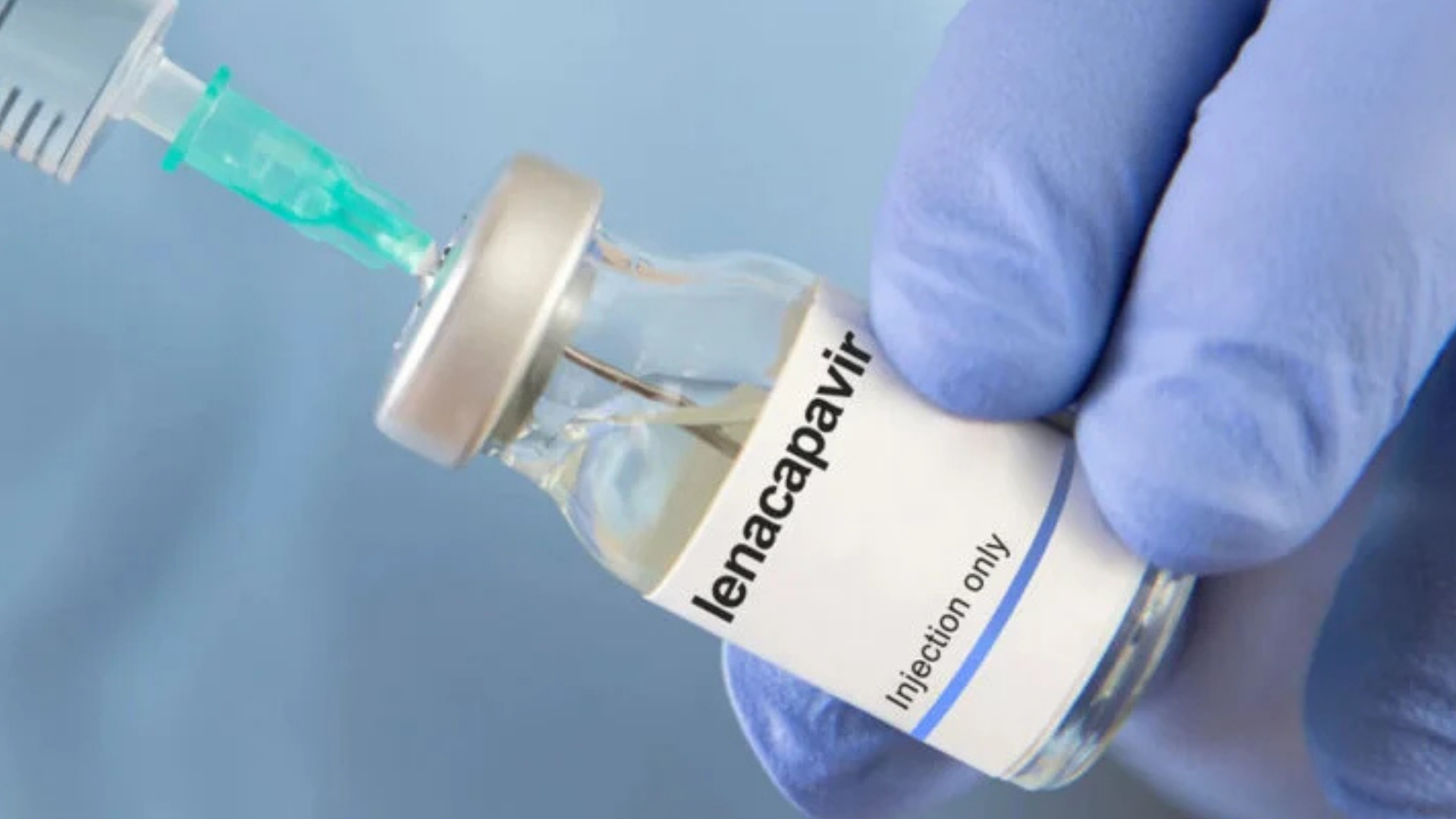
Imagine preventing HIV with just two injections a year. That's the promise of lenacapavir, a new long-acting injectable PrEP touted as one of the most promising advances in HIV prevention. But who will have access to this technology?
The answer lies in a topic that, at first glance, may seem distant from people's daily lives: intellectual property. Pharmaceutical patents directly influence the price of medicines, the production of generic versions, and the speed at which new technologies reach public health systems.
To discuss these challenges, PrEP in South America spoke with Susana van der Ploeg, a lawyer from the Working Group on Intellectual Property (GTPI), coordinated by the Brazilian Interdisciplinary AIDS Association (ABIA). In the interview, she explains how pharmaceutical patents work, analyzes their impact on access to medicines, and comments on the challenges for new HIV prevention technologies to reach the Brazilian population.
Susana holds a law degree from the Faculty of Law of Recife and a master's degree in Law and Innovation from the Federal University of Juiz de Fora. She has been working at GTPI for five years. During this time, she has transitioned from academic research to social activism, dedicating herself to discussions on access to medicines, intellectual property, and the right to health.
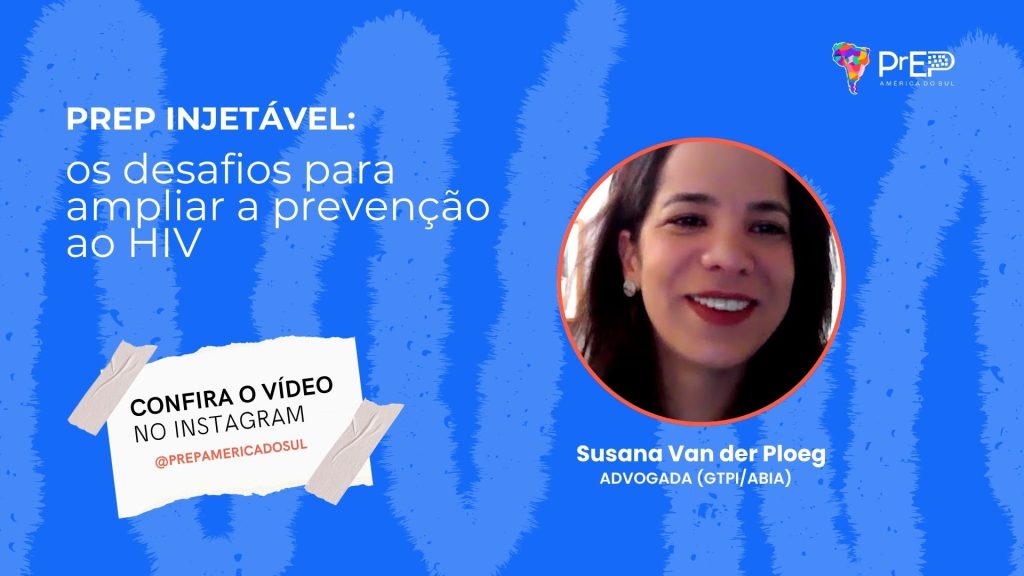
Confira o vídeo no Instagram ou a entrevista completa abaixo:
PrEP in South America: Lenacapavir has been touted as one of the biggest recent innovations in HIV prevention. What is the potential of this new injectable PrEP?
Susana van der Ploeg: Lenacapavir is a very promising technology. It is administered via injection every six months. Today, in Brazil, the main strategy offered by the SUS (Unified Health System) is daily oral PrEP. Although very effective, it requires a routine that doesn't always suit everyone's reality: frequent trips to the health system to pick up the medication, home storage, and daily use.
Therefore, injectable PrEP expands the range of choices and can make it easier to adhere to prevention for people who have difficulty maintaining continuous use of the medication.
Furthermore, clinical studies have shown very positive results. In research conducted in South Africa and Uganda, lenacapavir demonstrated high efficacy in preventing HIV among cisgender women. This result is important because cisgender women still face challenges in accessing prevention strategies and are often left out of discussions about PrEP.
PrEP in South America: What are the main obstacles to getting lenacapavir to the population?
Susana van der Ploeg: The main challenge is ensuring access. We can say many times that lenacapavir is very good, that it allows for greater adherence, that it can help combat stigma and expand prevention options. But none of this becomes a reality if the innovation doesn't reach people.
Today, for example, cabotegravir, another long-acting injectable PrEP, is offered in pharmacies for around R$4,000 per dose. In the case of lenacapavir, there is still no defined price for Brazil. At the same time, there are already estimates that generic versions could be produced for around US$40 per person per year.
The price of US$40 per person per year is less than a third of what Brazil currently pays for treatment with dolutegravir. Dolutegravir currently costs R$3.60 per pill. A quick calculation would be needed: R$3.60 times 365. We are paying approximately R$1,314 per year for just one medication. And PrEP needs to be below that price to be sustainable for the SUS (Brazilian public healthcare system).
Ultimately, the discussion revolves around patents. When a company holds a patent for a technology, it can determine who will have access to it, who will produce it, and what the price will be.
The Covid-19 pandemic made this very clear. We saw an entire continent, the African continent, facing difficulties accessing vaccines, while rich countries had enough doses to vaccinate their populations more than once. This is what many people called vaccine apartheid.
Therefore, when we talk about lenacapavir, the question isn't just whether the technology works. The question is also: who will have access? When will they have access? And who will decide that?
What is this innovation for if people won't have access to it?
PrEP in South America: How do patents work and how can they impact access to medicines?
Susana van der Ploeg: When a company obtains a patent on a drug, it gains a monopoly on that technology for a specified period. This means it can prevent other companies from producing, marketing, or developing versions of that product.
In practice, whoever holds the patent has the power to define who will produce the drug, where it will be produced, and what price will be charged. This creates barriers to access, especially when we are talking about health-related technologies capable of saving lives.
When a patent exists for a pharmaceutical product, the holder gains control over all the technology. And, by controlling this technology, they also control who will have access to it.
PrEP South America: What are the impacts of patents on drug prices?
Susana van der Ploeg: The absence of competition allows companies to charge very high prices. Lenacapavir itself is an example of this. Studies have shown that it could be produced for something between US$25 and US$40 per person per year. However, the prices currently charged by the industry are thousands of times higher.
This phenomenon doesn't only happen with HIV medications. It's part of a system where the patent holder has the freedom to define the market value of an essential technology. Ultimately, this can mean that an innovation capable of benefiting millions of people remains inaccessible to a large part of the population.
PrEP South America: Are there any alternatives to expand access when patents become a barrier?
Susana van der Ploeg: Yes. One of the instruments provided for in the legislation is compulsory licensing. It allows other companies to produce a certain drug without the authorization of the patent holder when the public interest is at stake.
This measure is often presented as something radical, but it does not remove the company's patent. The patent holder remains the owner of the technology and continues to receive royalties for the production and marketing of the drug. The goal is to balance intellectual property rights with the need to protect public health.
When more producers are able to manufacture a drug, prices tend to fall and access increases.
PrEP in South America: What needs to change for new HIV prevention technologies to reach the population more quickly?
Susana van der Ploeg: We need to strengthen social mobilization and broaden the public debate on intellectual property and access to medicines. Often, people don't realize how these issues directly influence their lives and healthcare systems. People don't understand why a medicine costs R$200 and, when they enter their CPF (Brazilian tax identification number), it starts costing R$73. Who controls these prices? Is this medicine patented? Why does a doctor prescribe a brand-name product when a generic version exists on the market?
We live under a very strong influence from the pharmaceutical industry, which has the power to influence prices, research, public policies, and even the debate about innovation. Therefore, it is important for society to better understand how patents work and what their impact is on access to medicines.
It is also necessary to have firm political decisions in defense of the public interest. Brazil has a healthcare system with enormous purchasing power and a significant history in responding to HIV. This potential can be used to strengthen national production and expand access to essential technologies.
But no single innovation will be sufficient. Tackling the HIV epidemic requires an integrated policy that includes prevention, treatment, combating stigma, support, and the participation of affected communities.
We need a policy that promotes condom use, that distributes condoms in basic food baskets. We need to talk about sexuality without a moralistic perspective. People are free to make their own choices and need access to information and prevention tools. If we want to confront the HIV epidemic, we need an integrated policy that combines prevention, treatment, combating stigma, and providing support.

 English
  Portuguese
  Spanish