


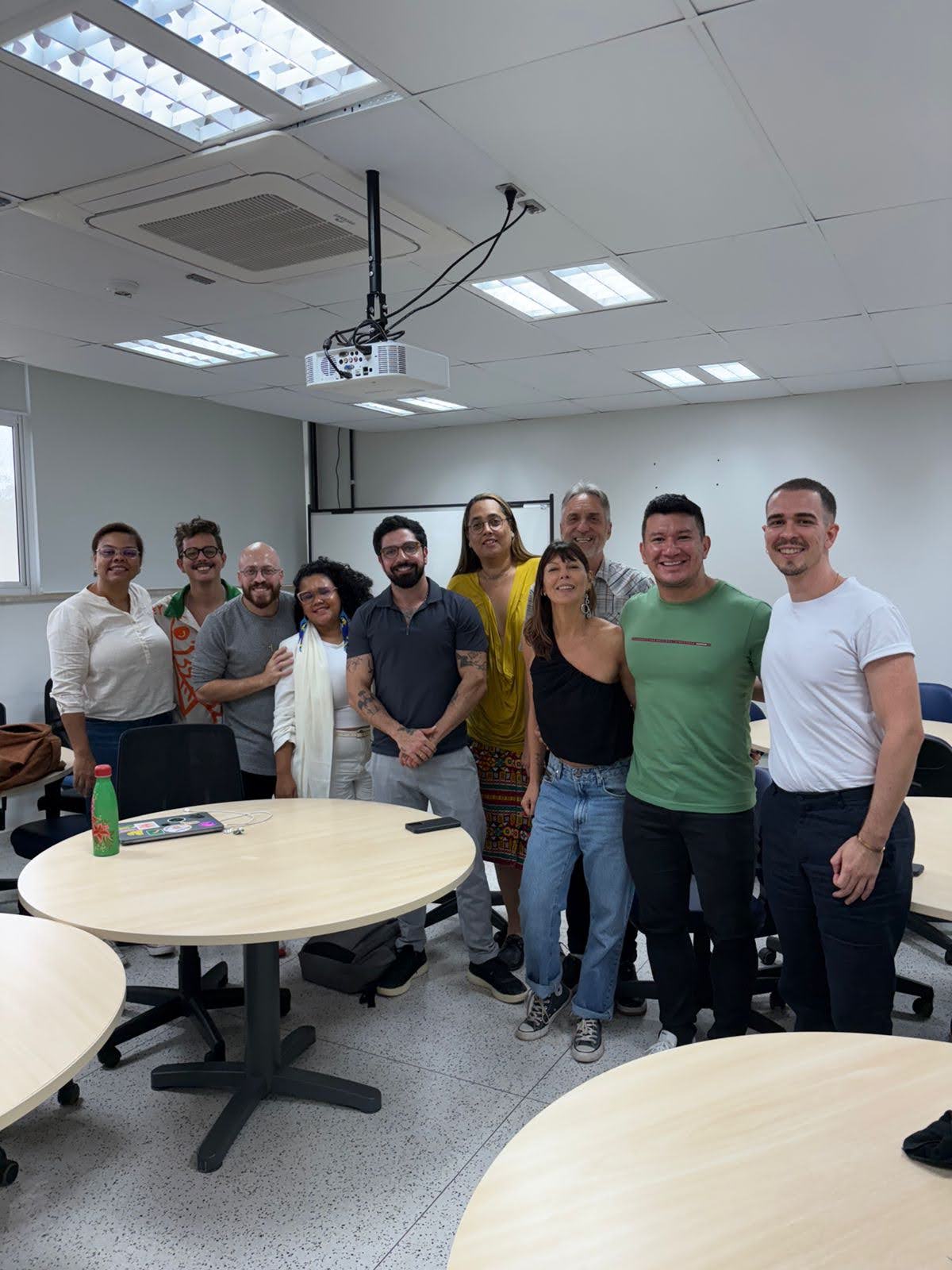
A Throwback to Last Year’s Highlights at PrEP South America
Written by Kris H. Oliveira and Thiago Peniche
The research project “Pre-Exposure Prophylaxis (PrEP) for HIV Prevention in South America: An Ethnography of Access, Use, and Management Experiences” — PrEP in South America (CNPq, Decit/SECTICS/MS and Dathi/SVSA/MS, grant numbers 445070/2023-4 and 405770/2024-3) — coordinated by André Machado and Kris H. de Oliveira and based at the Amazonas State University (UEA), carried out a significant range of activities throughout 2025. These actions included scientific publications, training initiatives, as well as institutional and community-based engagements, consolidating the project’s role as an interdisciplinary and transnational research network dedicated to the critical analysis of PrEP as an HIV prevention strategy in South America.
Below is a retrospective of the main activities carried out in 2025.
Education and community-based actions
“HIV/AIDS, new prevention technologies, social responses and neoliberal dilemmas”
In the first semester of 2025, the Institute of Social Medicine at UERJ (IMS/UERJ), in partnership with the PrEP in South America project, offered the course “HIV/AIDS, New Prevention Technologies, Social Responses, and Neoliberal Dilemmas” (001 – Special Topics in Humanities and Health III – IMS38277). A disciplina foi aberta a discentes de graduação e pós-graduação de diferentes regiões do Brasil, constituindo-se como um espaço formativo interdisciplinar voltado à análise crítica das transformações contemporâneas nas políticas de prevenção ao HIV, das tecnologias biomédicas emergentes e de seus impactos sociais, políticos e éticos.
Find out more here.
Reading Group “Scientific Practice in the Age of Generative Artificial Intelligence”
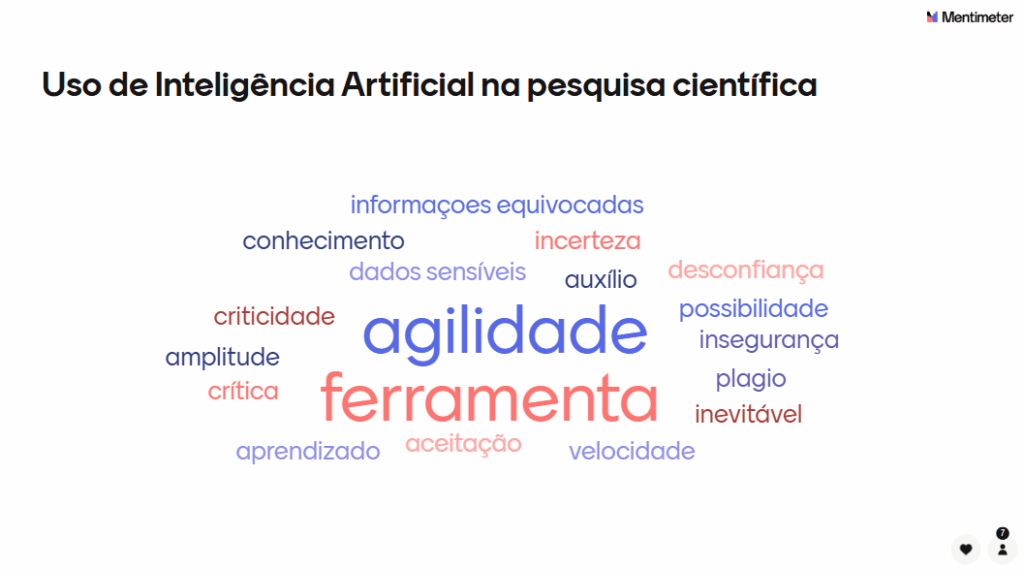
In September, we organized a reading group dedicated to reflecting on scientific practice in the age of Generative Artificial Intelligence (GAI). The activity was carried out in partnership with the Laboratory for Socio-Anthropological Studies on Life Technologies (Nudecri/Labjor/Unicamp) and the Center for Psychosocial Studies on Human Rights and Health (NEPDS/UEA). Held over five meetings, the group focused on discussing the book “Guidelines for the Ethical and Responsible Use of Generative Artificial Intelligence: A Practical Guide for Researchers,” by Rafael C. Sampaio, Marcelo Sabbatini, and Ricardo Limongi (2024). The initiative contributed to strengthening critical and ethical reflection on the use of GAI tools in scientific research, particularly in the human and social sciences in health.
Find out more here.
Education and community-based actions
Dialogue with Health Professionals at Professor Masao Goto Health Center / Rio de Janeiro, RJ
On February 17, PET Saúde GT 1 organized a lecture and discussion session on PrEP and PEP at the Professor Masao Goto Municipal Health Center. The activity addressed how these prevention strategies work, their objectives, priority populations, and key information for HIV prevention, strengthening dialogue between the university, health services, and the community. The event featured the participation of Thiago Peniche, who shared updated and relevant contributions on the topic, expanding the discussion and enhancing the exchange of experiences among participants.
Watch it on instagram.
Community Advisory Committee
In partnership with the Brazilian Interdisciplinary AIDS Association (ABIA), we formalized our Community Advisory Committee, with representatives from all regions of Brazil, as well as from Argentina, Bolivia, Colombia, and Paraguay.
Educational activities during Carnival
Also within the scope of community actions and scientific dissemination, we participated in PauerFolia, a series by communicator Ágata Pauer. The initiative aimed to raise public awareness about PrEP during Carnival, promoting accessible information about HIV prevention in a festive context with a large circulation of people. The PauerFolia series sought to reinforce the importance of care, combined prevention, and risk reduction, contributing to a safer and more informed Carnival experience.

Watch it on instagram.
Contextual Analysis
PrEP South America conducted a regional survey on the impacts of the funding cuts to the United States President’s Emergency Plan for AIDS Relief (PEPFAR), announced at the beginning of the year, which led to the interruption or reduction of essential HIV prevention, treatment, care, and research programs in South America. Although Brazil’s Unified Health System (SUS) was not directly affected, several local projects and community initiatives were discontinued, resulting in staff layoffs and reduced access to services aimed at vulnerable populations. In countries such as Colombia, Peru, and Venezuela, the cuts had more severe effects, compromising care for migrants, refugees, and LGBTQIAPN+ populations, as well as affecting the distribution of supplies, access to PrEP, and community-based support services. The survey also identified negative impacts on HIV-related scientific production, including the suspension of studies and thematic restrictions imposed on research, highlighting a context of shrinking international funding with direct consequences for the regional response to the epidemic.
Read the summary on instagram or the full version on site.
Conferences and Events
National Week of Science, Technology, and Innovation for the SUS
In June, PrEP South America was featured at the opening of the National Week of Science, Technology, and Innovation for the SUS, held from June 2 to 5 in Brasília by the Ministry of Health. The initiative was presented by Prof. Dr. Breno de Oliveira Ferreira during the Marco Zero Seminar, organized by CNPq and the Department of Science and Technology (Decit). On this occasion, the collaborating researcher represented the project’s coordinators, André Machado and Kris H. Oliveira, sharing the objectives, progress, and perspectives of the research, with emphasis on access to PrEP in South American countries.
Read the summary on instagram or the full version on site.
The PrEP in South America Project participates in the Latin American Congress on STIs and HIV/AIDS and the Brazilian Congress on AIDS
Between June 4 and 6, 2025, PrEP South America participated in one of the region’s leading scientific events dedicated to sexual health and HIV prevention: the Latin American Congress on STIs/HIV/AIDS and the Brazilian Congress on AIDS, held at the ExpoMag Convention Center in Rio de Janeiro (RJ). During the congress, coordinators André Machado and Kris H. Oliveira presented two papers, contributing to the scientific debate and to the dissemination of the project’s partial results.
Read the summary on instagram or the full version on site.
10th Latin American and Caribbean Conference on Social Sciences (CLACSO 2025)
Also in June 2025, we participated in the 10th Latin American and Caribbean Conference on Social Sciences (CLACSO 2025), presenting an unprecedented mapping of public PrEP policies across the 13 South American countries. The presentation highlighted progress, gaps, and structural challenges to ensuring equitable access to HIV prevention in a region marked by profound social, economic, and institutional inequalities.
Read the summary on instagram or the full version on site.
14th Brazilian Congress of Collective Health (Abrascão)
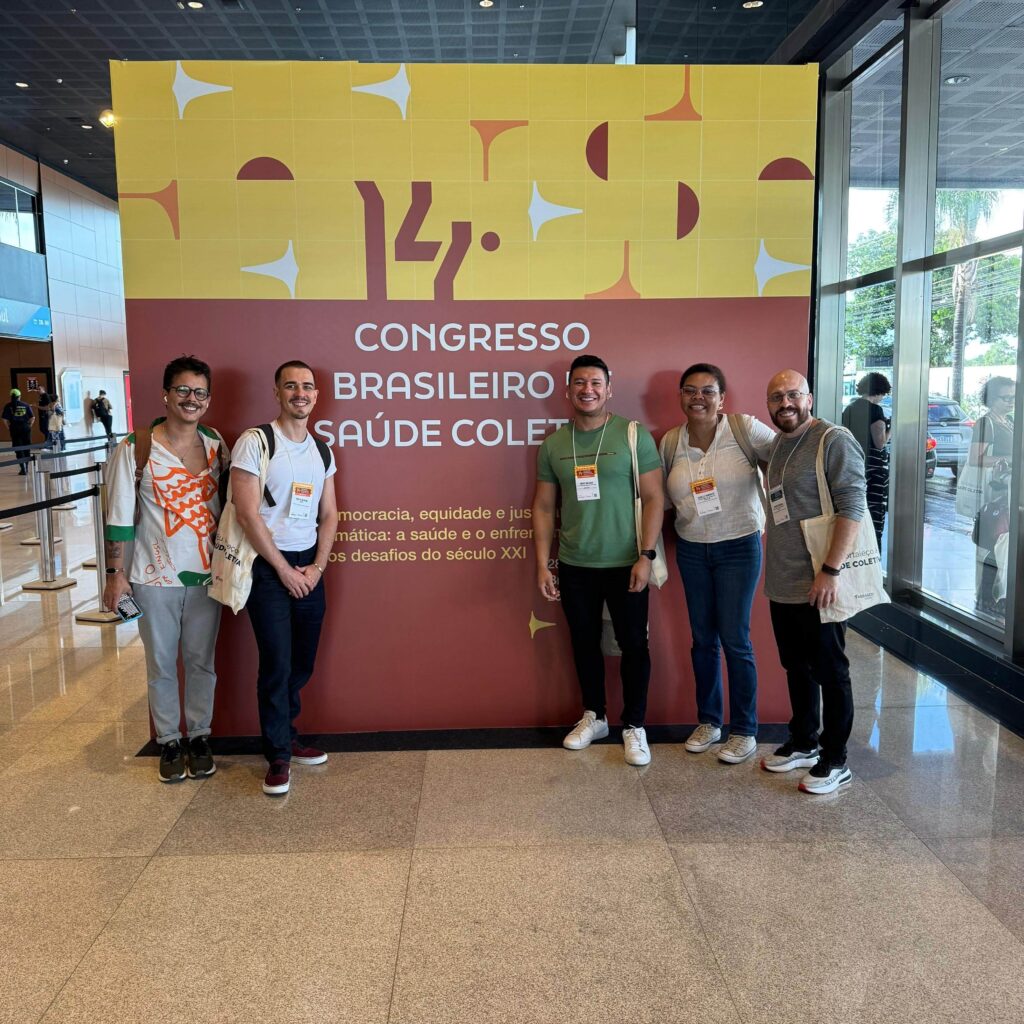
Between November 28 and December 3, eight papers were presented at the 14th Brazilian Congress of Collective Health (Abrascão), held in Brasília. Abrascão is the leading national congress in Collective Health, bringing together faculty members, professionals, students, and social movements since its creation in 1986.
Read the summary on instagram or the full version on site.
12th Congress of the Brazilian Association for Trans-Homoculture Studies (ABETH)
Entre 25 e 30 de novembro, em Brasília, o PrEP América do Sul participou com a apresentação de um painel no 12º Congresso da Associação Brasileira de Estudos da Trans-Homocultura (ABETH), um dos principais espaços de produção de conhecimento sobre gênero, sexualidade e dissidências no Brasil.
Read the summary on instagram or the full version on site.
Publications
Interview
PrEP South America: Interview with André Luiz Machado das Neves & Kris Herik de Oliveira
Authors: Patrick de Almeida Trindade Braga; Kris Herik de Oliveira; André Luiz Machado das Neves
Published by: Revista Áskesis
Find out more here.
Published articles
PrEP South America: a multicenter and interdisciplinary research project grounded in solidarity
Authors: Kris Herik de Oliveira; André Luiz Machado das Neves
Publicação: Boletim ABIA, nº 68, setembro/2025
Find out more here.
PrEP = Autonomy”: communication for HIV prevention among young people within the logic of neoliberal rationality
Authors: Kris Herik de Oliveira; André Luiz Machado das Neves; Fernando Seffner
Published on: Saúde e Sociedade
Find out more here.
Article accepted for publication in an international journal.
PrEP Public Policies for HIV Prevention in South America: An Intersectional Analysis
Journal: BMC Public Health
Authors: Kris Herik de Oliveira; Claudia Mercedes Mora Cárdenas; Isabelle Brambilla Honorato; Carolina Bonomi de Menezes Guerra; Luiz Fernando Greiner Barp; Gabriela Bercht; Fernando Joaquim da Silva Junior; Flávia Danielle da Silva Câmara; Marianna Agnes de Almeida Soares; Gabriel Luis Pereira Nolasco; Guilherme Rodrigues Passamani; André Luiz Machado das Neves.
Manuscripts submitted for publication
Pre-Exposure Prophylaxis (PrEP) for HIV Prevention: A Global Scoping Review (2001–2024)
Journal: Journal of the International AIDS Society
Authors: Kris Herik de Oliveira; Claudia Mercedes Mora Cárdenas; Isabelle Brambilla Honorato; Carolina Bonomi de Menezes Guerra; Luiz Fernando Greiner Barp; Gabriela Bercht; Fernando Joaquim da Silva Junior; Flávia Danielle da Silva Câmara; Marianna Agnes de Almeida Soares; Gabriel Luis Pereira Nolasco; Guilherme Rodrigues Passamani; André Luiz Machado das Neves.
HIV prevention policies in critical climate events: ethnographic reflections on PrEP provision during the floods in Porto Alegre (2024)
Journal: Interseções (UERJ)
Authors: Kris Herik de Oliveira; André Luiz Machado das Neves; Fernando Seffner
PrEP no Instagram: prazer, proteção e discurso biomédico em perfis sul-americanos
Journal: REBEH – Revista Brasileira de Estudos da Homocultura
Authors: Kris Herik de Oliveira; André Luiz Machado das Neves; Fernando Seffner
In the media
"On the Field" Series
In 2025, PrEP South America launched the "In the Field" series, an initiative aimed at expanding the dialogue between researchers conducting fieldwork in the area of PrEP. The series seeks to give visibility to empirical experiences, methodological challenges, and reflections produced from ethnographic and qualitative work in different contexts in South America, strengthening the circulation of knowledge produced within the project and partner networks.
- An anthropologist on Grindr: watch it on Instagram or on the website
- This activism belongs to all of us: watch it on Instagram or on the website
- (PrEP)ared: the technoscientific construction of male homosexuality based on HIV pre-exposure prophylaxis in Brazil: watch it on Instagram
Series “PrEP in South America"
Throughout 2025, the series “PrEP in South America” was launched, aiming to present different perspectives on the implementation, access, and challenges of PrEP in South American countries. The initiative contributes to a comparative and regional approach, highlighting national specificities, structural inequalities, and local experiences in the field of HIV prevention.
Access the videos in the series at the links below.
“Perspectives” Series
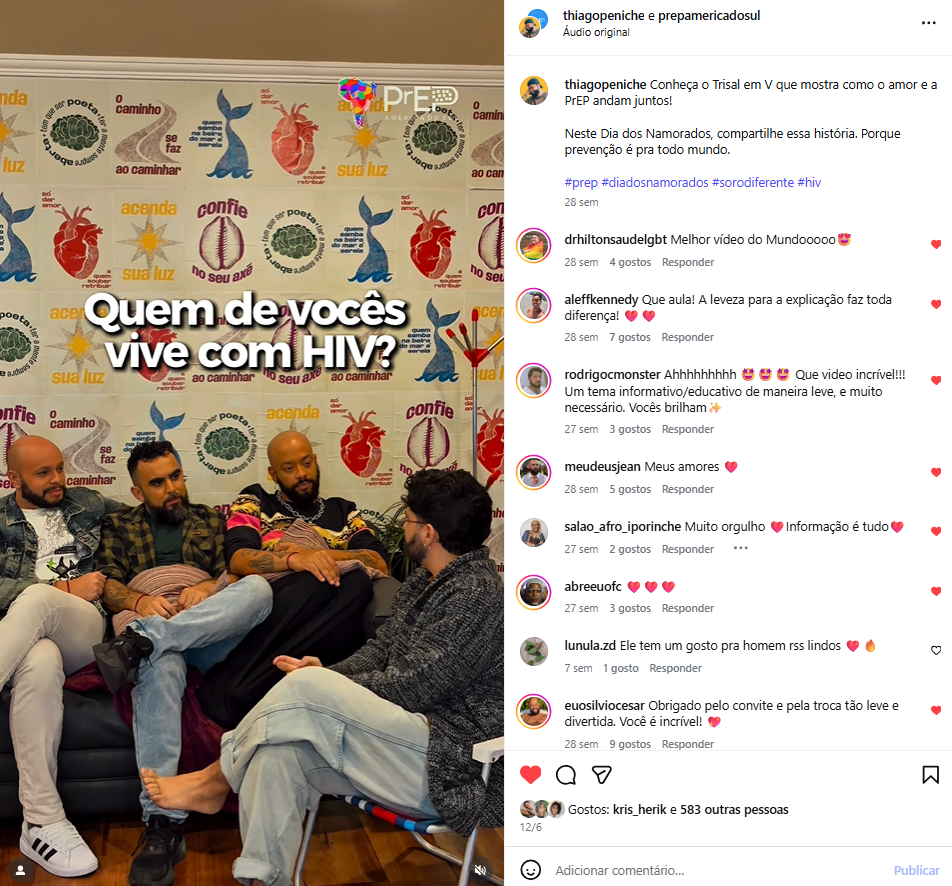
In 2025, the project also launched the “Perspectives” series, dedicated to bringing together multiple experiences, narratives, and perspectives on PrEP. The series values diverse voices, including people who use PrEP, researchers, activists, and professionals involved in HIV prevention, contributing to a pluralistic and sensitive debate that reflects the different social, political, and institutional realities of the region.
- Three people in love: watch it on instagram
- Conversation with infectious disease specialist Dr. Hilton Luís: watch it on Instagram
- PrEP and cis women: watch it on Instagram or on the website
Ethics in research
Throughout the year, in collaboration with the regional coordinators, PrEP South America developed the document "Ethical Guidelines for Productions Related to the PrEP South America Project." The material aimed to systematically guide the scientific production activities of the project, offering common ethical parameters for the researchers involved, as well as for the different forms of dissemination, analysis, and publication of the data produced within the scope of the research.
Field Research
In September, the PrEP South America project received approval from the Research Ethics Committee of the State University of Amazonas (UEA), the project's host institution. Following this approval, pre-fieldwork activities began, carried out progressively as authorizations from local Research Ethics Committees (CEPs) were issued. Simultaneously, throughout Carnival 2025, pre-fieldwork actions were conducted in different regions of Brazil to observe how PrEP was being mobilized, or not, in local contexts, considering territorial dynamics, large-scale events, and prevention strategies in festive settings.
Community Advisory Committee
In partnership with the Brazilian Interdisciplinary AIDS Association (ABIA), the PrEP South America project formalized its Community Advisory Committee (CCC). The CCC was established with the mission of ensuring social participation in monitoring the project, promoting ethical, transparent, and collaborative articulation between communities, researchers, and institutions. Its work seeks to strengthen the defense of rights, social representation, and the production of knowledge situated within the South American context. The CCC now includes representatives from all macro-regions of Brazil and from the countries where the project operates, such as Argentina, Bolivia, Colombia, and Paraguay.
Meetings
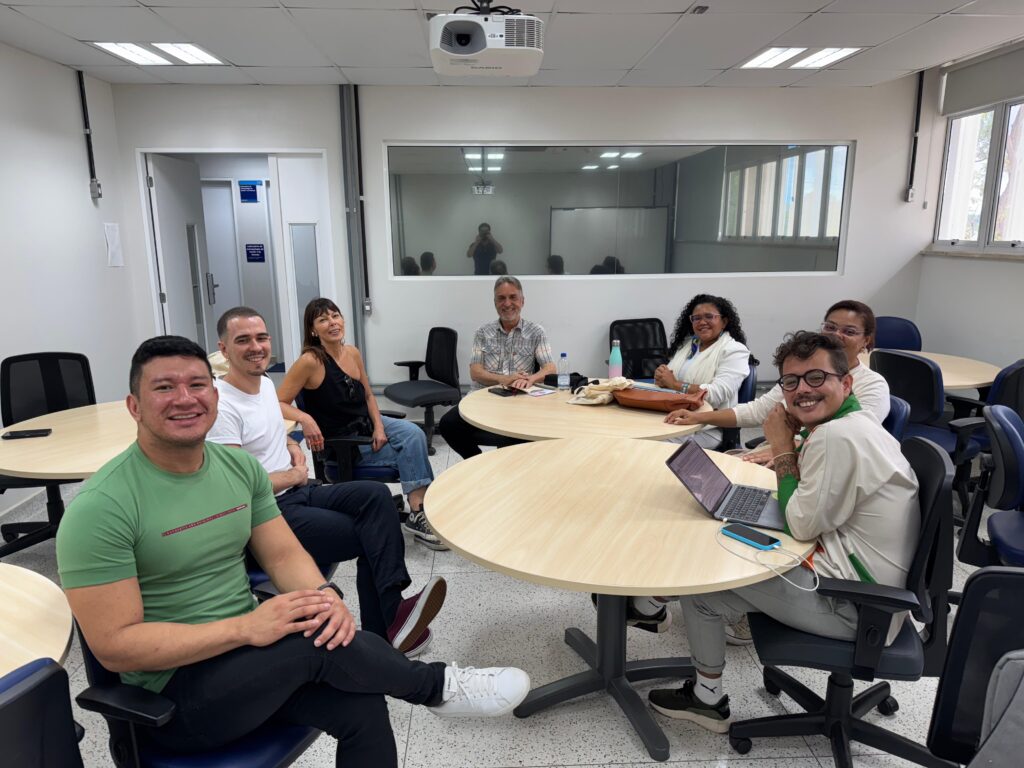
The activities carried out throughout 2025 were made possible by an intense process of collective articulation and coordination. Throughout the year, 2 general meetings were held with the entire team, 6 regional coordination meetings, and 51 meetings dedicated to scientific production, in addition to daily general coordination meetings, ensuring continuous monitoring of activities, integration between work fronts, and the systematic advancement of the project.
General coordination assessment
In 2024, PrEP South America established itself as a robust and innovative qualitative research project, integrating scientific activities, academic training and political articulations at the regional level. The activities carried out throughout the year reaffirmed the team's commitment to coordinating PrEP for HIV prevention in South America. The strengthening of transnational collaboration networks, the training of researchers and students, the preliminary results presented at scientific events and the technical visits highlight the project's growing impact. The financial support obtained at the end of the year will allow us to move forward with new research fronts and ensure the continuity of the work over the next two years, reinforcing the role of PrEP South America at the interface between public health, scientific production and social justice.

 English
  Portuguese
  Spanish